The days after an older parent leaves hospital are one of the most fragile stretches in their whole recovery. New medicines, a weaker body and nobody watching overnight mean a small problem can turn serious within a fortnight. A home doctor visit in the week after discharge is how families in Kota Kinabalu catch those problems early, at home, before they become another emergency.
Why the first weeks after discharge are so risky
A discharge summary can make everything look settled. For an older person it rarely is. Hospital research consistently links a large share of readmissions among older patients to medication problems, and finds that most of those are preventable. A parent goes home with a longer drug list than they arrived with, a dose that has changed, or two medicines that quietly pull against each other, and the effects only surface once they are back in their own bed.
The risk rises sharply in exactly the situations most Sabahan families will recognise: a parent who takes many tablets, who lives alone or with an equally elderly spouse, or whose medications were adjusted on the very day they were sent home. There is no ward round in the living room. A skipped tablet, a surgical wound that starts to weep, or confusion creeping in from simple dehydration can all go unnoticed until someone ends up back in the emergency department.
What a home doctor actually does after discharge
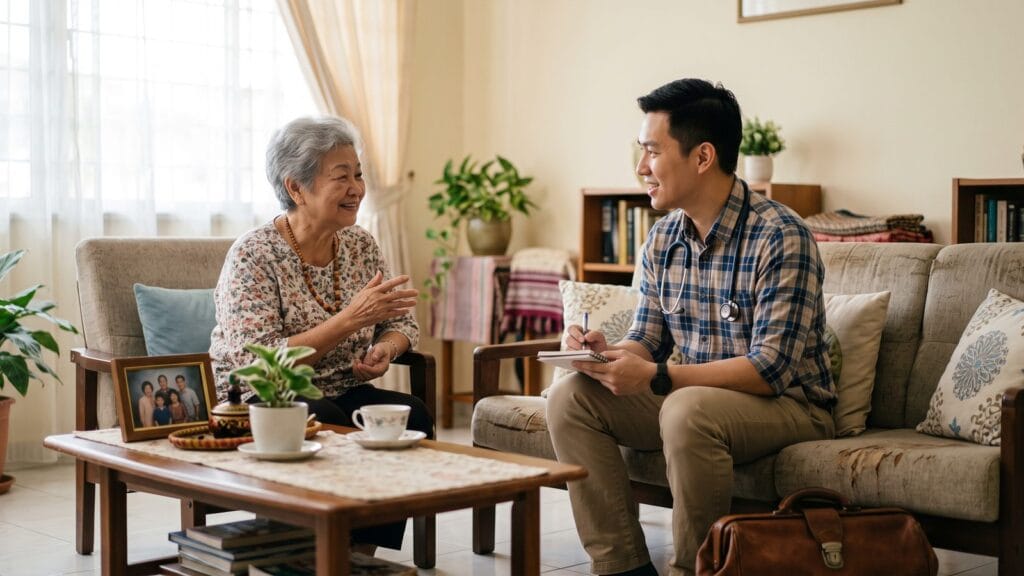
A post-discharge visit exists to close that gap, in the place recovery is really happening. A typical visit covers:
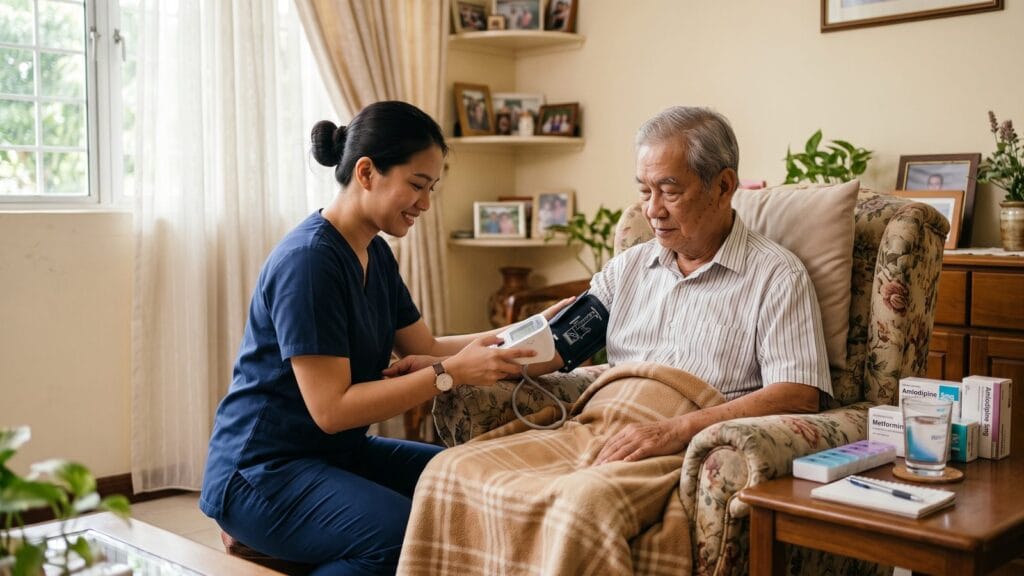
- Medication reconciliation. Going through the discharge letter against what is actually in the house, removing duplicates, and making sure your parent understands what each medicine is for.
- A recovery check. The surgical site or wound, blood pressure, hydration, pain, appetite, and how well they are moving.
- Reading the home. Trip hazards, bathroom safety, and whether the plan the hospital wrote is realistic in this particular house.
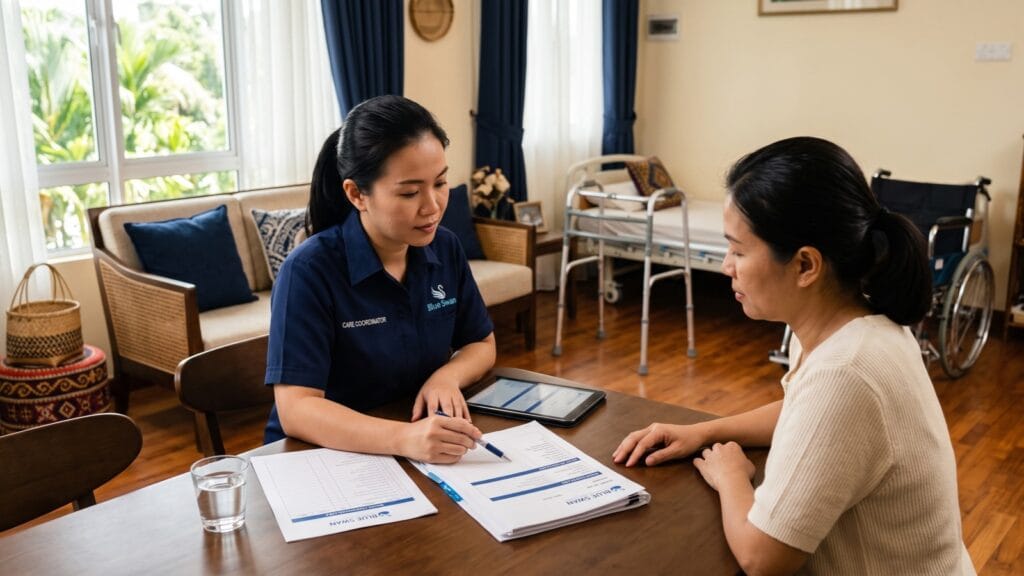
- Coordinating the follow-up. Talking to the discharging team and any specialists, and arranging nursing visits, physiotherapy or equipment where they are needed.
- A plan the family can follow. Clear warning signs to watch for and a number to call, so nobody is guessing at two in the morning.
Which patients benefit most
Post-discharge home care matters most after a fall, a stroke, surgery, or a long medical admission, and for anyone managing several conditions at once. It matters more still when your parent lives alone, takes a long list of medicines, or has just had those medicines changed. It is also the answer many diaspora families are looking for: adult children in Kuala Lumpur, Singapore or further overseas who cannot be at the bedside but need someone medical to lay eyes on their parent and report back honestly.
What to watch for in the first two weeks
Whether or not a doctor is visiting, these are the changes that should prompt a phone call rather than a wait-and-see:
- A fever, or a wound that turns red, swollen or warm, or begins to leak.
- Pain that is getting worse rather than easing, or that the current medicine no longer touches.
- New or increasing confusion, drowsiness or agitation.
- Eating and drinking very little, or clear signs of dehydration.
- Breathlessness, dizziness, or another fall.
- Vomiting, or being unable to keep medicines down.
A home doctor or nurse can assess most of these where your parent is and act early. That early action is often the whole difference between a manageable problem and a second admission.
How Blue Swan manages the hospital-to-home handover
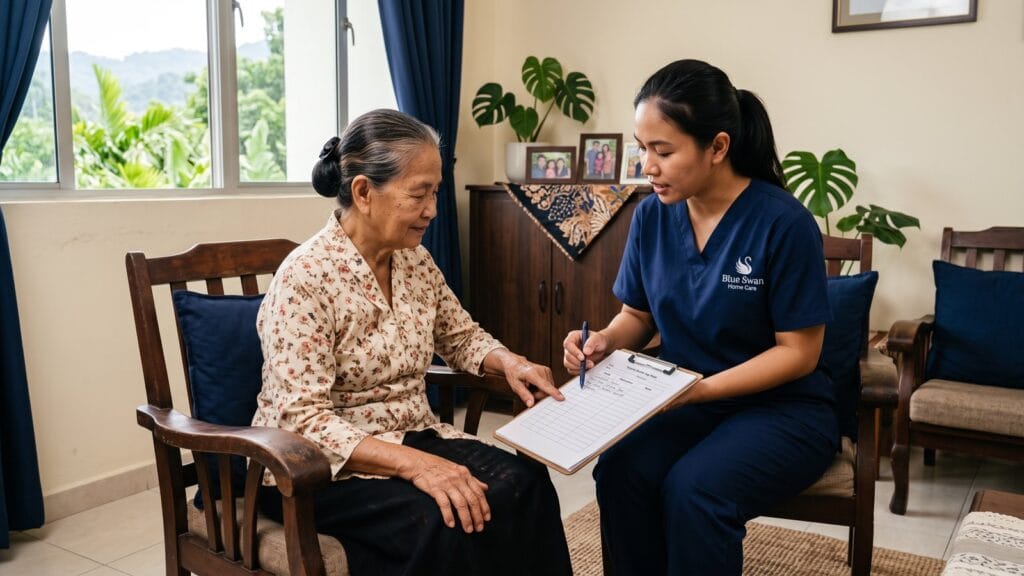
At Blue Swan, this transition is a service in its own right. Our nurse-led Transition Care is built for medically stable patients coming home after discharge or surgery, and steps up to doctor-led support when the picture is more complex. Every plan is built on the clinical framework designed by Dr Gordon Pang, Chief Clinical Officer and State Geriatrician for Sabah, and we coordinate directly with the discharging hospital, whether that is Queen Elizabeth Hospital, QEH II or a private hospital, so nothing is dropped in the handover. You can read more about our doctor home visits and how our care works.
Common questions
How soon after discharge should a home doctor visit?
Ideally within the first few days, and sooner if the medications changed a lot or your parent lives alone. The earliest days are when quiet problems do the most damage.
Can you coordinate with the hospital that discharged my parent?
Yes. We work from the discharge summary and liaise with the hospital team and any specialists, so the plan started in hospital continues properly at home.
My parent is in Kota Kinabalu but I live overseas. Can you manage this?
Yes. We keep families updated wherever they are and act as your eyes on the ground, so you are not making decisions blind from another country.
Is a post-discharge visit doctor-led or nurse-led?
It depends on the case. Stable recoveries are usually nurse-led with medical oversight; more complex situations are doctor-led. Either way, the care runs under a specialist’s guidance.
If your parent is coming home from hospital in Kota Kinabalu and you want a medical eye on their recovery, reach out for a complimentary care planning discussion.